Telescopes:
* Space Telescopes:
* Hubble Space Telescope (HST): A versatile telescope orbiting Earth, providing high-resolution images in visible, ultraviolet, and near-infrared light.
* James Webb Space Telescope (JWST): A powerful infrared telescope in orbit around the Sun, designed to observe the earliest stars and galaxies.
* Spitzer Space Telescope: An infrared telescope, retired in 2020, that made significant discoveries about planets, stars, and galaxies.
* Chandra X-ray Observatory: Observes the universe in X-rays, revealing high-energy phenomena like black holes, supernova remnants, and galaxy clusters.
* XMM-Newton: A European Space Agency X-ray observatory, complementing Chandra's observations.
* Ground-based Telescopes:
* Very Large Telescope (VLT): An array of four 8.2-meter telescopes in Chile, offering exceptional image quality and sensitivity.
* Atacama Large Millimeter/submillimeter Array (ALMA): An array of 66 antennas in Chile, studying the universe at millimeter and submillimeter wavelengths.
* Keck Observatory: Two 10-meter telescopes in Hawaii, leading in adaptive optics and interferometry.
* Arecibo Observatory: A large radio telescope in Puerto Rico, used for radio astronomy and planetary radar.
Other Equipment:
* Spectrographs: Instruments that split light into its component wavelengths, revealing the composition and motion of celestial objects.
* Photometers: Measure the brightness of objects at different wavelengths.
* Interferometers: Combine light from multiple telescopes to achieve higher resolution, enabling the study of finer details.
* Adaptive Optics: Systems that correct for atmospheric distortions, improving image quality for ground-based telescopes.
* Supercomputers: Powerful computers used for data analysis, modeling, and simulations.
Data Analysis Tools:
* Specialized software: Used for processing and analyzing astronomical data, including image processing, spectral analysis, and statistical analysis.
* Machine learning algorithms: Employed for automated detection of objects, classification, and data interpretation.
Future Equipment:
* Next-generation telescopes: Advanced telescopes are under development, such as the Extremely Large Telescope (ELT) and the Thirty Meter Telescope (TMT), promising even greater capabilities.
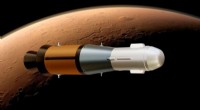
* Spacecraft missions: Dedicated spacecraft are being designed to explore specific celestial objects, such as Mars rovers, planetary probes, and telescopes orbiting other planets.
These instruments and technologies are constantly evolving, pushing the boundaries of our understanding of the universe and revealing new wonders.