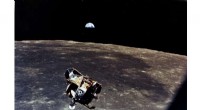
1. Gravity: This is the force of attraction between any two objects with mass. The larger the mass, the stronger the gravitational pull. In the case of orbits, the primary force is the gravity of the larger object, like a star or a planet, pulling on a smaller object, like a planet or a moon.
2. Inertia: This is the tendency of an object to resist changes in its motion. An object in motion wants to stay in motion at a constant speed and direction.
How it works:
* Imagine throwing a ball horizontally. It will travel in a straight line until gravity pulls it down, causing it to follow a curved path.
* Now imagine throwing the ball faster. The curve of the path will be less pronounced.
* If you throw the ball fast enough, the curvature of the path will match the curvature of the Earth. The ball will be constantly falling towards the Earth but never actually hitting it, because it's moving sideways at the same rate that the Earth is curving away. This is an orbit.
Key points to remember:
* The speed of the orbiting object is crucial: Too slow, and it will fall towards the larger object. Too fast, and it will fly away.
* Orbits are not perfectly circular: Most orbits are elliptical, meaning they have a slightly oval shape.
* Other factors can affect orbits: These include the gravitational influence of other objects, atmospheric drag, and the Sun's radiation pressure.
In summary, orbits are the result of a constant interplay between gravity and inertia. The object is continuously falling towards the larger object due to gravity, but its sideways motion, thanks to inertia, keeps it from actually hitting the larger object.