1. Extreme Brightness Disparity: Stars are incredibly bright compared to planets, making it difficult to detect the faint light reflected from a planet. This is like trying to spot a firefly next to a spotlight!
2. Small Angular Separation: Planets orbit very close to their stars, resulting in a tiny angular separation between them. This makes it extremely difficult to resolve the planet from its star, especially when using ground-based telescopes with atmospheric distortion.
3. Transit Method Limitations: The transit method, which detects planets by observing their shadows as they pass in front of their star, only works for planets that orbit their star edge-on relative to our viewpoint. This means we miss many planets that are not in the right orientation.
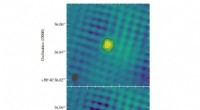
4. Direct Imaging Challenges: Directly imaging planets is even more challenging, requiring advanced technologies like adaptive optics and coronagraphs to block out the star's glare.
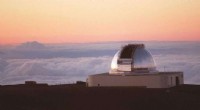
5. Atmospheric Interference: Ground-based telescopes are limited by the blurring effects of Earth's atmosphere. This makes it difficult to obtain clear images of faint objects like exoplanets.
6. Limited Wavelength Range: Most telescopes are optimized for specific wavelengths of light. This can limit our ability to detect planets in different regions of the electromagnetic spectrum, which could be crucial for understanding their atmospheres.
7. Distance: Exoplanets are incredibly far away, making them faint and difficult to detect. The light from a planet several light-years away is incredibly weak by the time it reaches Earth.
Despite these challenges, astronomers are constantly developing new techniques and technologies to overcome these limitations.
Here are some examples:
* Space-based telescopes: Telescopes like the Kepler and TESS missions are able to detect transiting planets with greater sensitivity and accuracy.
* Adaptive optics: This technology helps to correct for the distortions caused by the Earth's atmosphere, allowing ground-based telescopes to produce sharper images.
* Coronagraphs: These devices block out the light from the star, allowing astronomers to see the faint light from orbiting planets.
With continued advancements in technology, astronomers are making significant progress in discovering and characterizing extrasolar planets.