Here's a breakdown to give you an idea of their size:
* Diameter: Massive stars can have diameters tens to hundreds of times larger than our Sun.
* Volume: This means their volume is thousands to millions of times greater than our Sun.
* Example: A star like Betelgeuse (a red supergiant) has a diameter roughly 900 times that of the Sun. If it were placed where our Sun is, its surface would extend out past the orbit of Jupiter!
It's important to note:
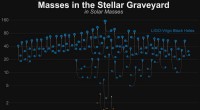
* Mass vs. Size: While mass and size are related, they aren't the same. A star can be more massive but smaller in diameter than another.
* Evolution: Massive stars have shorter lifespans and evolve rapidly, often ending their lives in spectacular supernova explosions.
So, while there's no single answer to "how big is a massive star," it's safe to say they are truly massive and incredibly large.