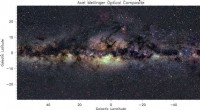
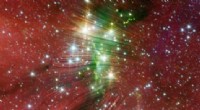
* Star Formation: Galaxies constantly form new stars from gas and dust clouds. This process is ongoing, but its rate varies depending on the galaxy's size, age, and composition.
* Star Death: Stars have finite lifespans. When stars die, they can either fade away peacefully or explode in a supernova. Supernovae can sometimes trigger new star formation, but they also expel matter from the galaxy.
* Galaxy Interactions: Galaxies can collide or merge, which can dramatically alter the star population. These events can trigger bursts of star formation or even strip away stars from one galaxy into another.
Overall: The number of stars in a galaxy can increase due to star formation and decrease due to star death and galaxy interactions. These processes occur over very long timescales, on the order of millions or billions of years. So, while the number of stars does change, it's a gradual process that is difficult to observe directly over human lifetimes.
It's important to note that astronomers are still studying the complex dynamics of galaxies and the factors that influence their evolution.