Color and Temperature:
* Hotter stars emit more blue light. This is why stars like Rigel (in Orion) appear bluish-white.
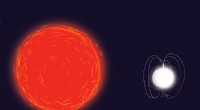
* Cooler stars emit more red light. This is why stars like Betelgeuse (also in Orion) appear reddish.
* Stars with intermediate temperatures appear yellowish-white, like our Sun.
Brightness and Size:
* Apparent Brightness: This is how bright a star appears from Earth. It depends on the star's actual brightness (luminosity) and its distance from us.
* Luminosity: This is the star's actual brightness, independent of its distance. Larger stars are generally more luminous than smaller stars.
Color and Brightness Together:
* Hertzsprung-Russell (H-R) Diagram: This diagram plots stars based on their temperature (color) and luminosity (brightness). It shows the relationship between these properties and reveals the evolutionary stages of stars.
* Determining Star Age: The H-R Diagram helps us understand how stars evolve over time. We can estimate a star's age based on its position on the diagram.
Why is this important?
Understanding a star's color and brightness helps us:
* Classify stars: We can group stars into categories based on their physical properties.
* Study star evolution: We can track the changes a star undergoes throughout its lifetime.
* Explore the universe: We can determine the distances to stars and galaxies, and understand the composition and evolution of the universe.
In short, a star's color and brightness are like fingerprints that reveal its secrets and help us understand the vast and fascinating universe.