Here's a slightly more detailed explanation:
* Nebular Hypothesis: The theory suggests that stars and planets form from large clouds of gas and dust called nebulae.
* Cooling and Condensation: As these nebulae cool, the particles within them begin to clump together due to gravity.
* Contraction: This clumping leads to further gravitational attraction, causing the cloud to contract even more. As it contracts, the core of the nebula heats up.
* Star Formation: If the core becomes hot and dense enough, nuclear fusion begins, forming a star.
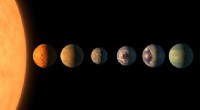
* Planetary Formation: Meanwhile, the remaining material in the disk surrounding the star can clump together and form planets, moons, and other objects.
So, yes, the cooling, condensing, and contracting of nebular gases are key elements in the formation of celestial objects.