Here's why:
* The Moon is a large, rocky body orbiting the Earth. It doesn't have its own internal source of light like stars do (which produce their own light through nuclear fusion).
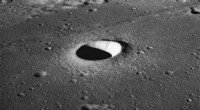
* The Moon's surface is covered in a dusty, gray material called regolith. This regolith is made up of crushed rock and dust, and it's very good at reflecting sunlight.
* When sunlight hits the Moon's surface, it bounces off the regolith and travels back towards Earth. This is what we see as moonlight.
So, the moon is essentially a giant mirror, reflecting the sun's light and making it appear to glow.