Servicing Missions:
* SM 1 (December 1993): This was the most critical mission. It fixed a major flaw in the telescope's primary mirror, which was causing blurry images. Astronauts installed corrective optics (called COSTAR) to compensate for the flaw, making Hubble capable of taking sharp images.
* SM 2 (February 1997): This mission upgraded Hubble's instruments, including the installation of the Near Infrared Camera and Multi-Object Spectrometer (NICMOS). It also replaced the telescope's solar arrays, gyroscopes, and other components.
* SM 3A (December 1999): This mission was a quick repair mission to replace a failing gyroscope and a magnetometer.
* SM 3B (March 2002): This mission replaced the telescope's aging gyroscopes and other components. It also installed the Advanced Camera for Surveys (ACS), which greatly enhanced Hubble's imaging capabilities.
* SM 4 (May 2009): This was the final servicing mission for Hubble. It installed two new instruments: the Wide Field Camera 3 (WFC3) and the Cosmic Origins Spectrograph (COS). The mission also repaired several other instruments, including the Space Telescope Imaging Spectrograph (STIS).
How the Repairs Were Done:
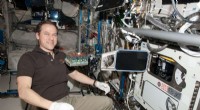
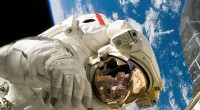
* Spacewalks: Astronauts performed intricate and complex tasks outside the space shuttle, using specialized tools and techniques.
* Instrument Replacement and Upgrades: Astronauts carefully removed old instruments and installed new ones, ensuring proper connections and alignment.
* Mirror Correction: COSTAR was a device installed inside Hubble to correct the mirror's flaw, allowing light to focus properly.
* General Maintenance: Astronauts replaced aging components like gyroscopes, solar panels, and batteries to ensure the telescope's continued operation.
The Impact of the Repairs:
These missions extended Hubble's lifetime and significantly improved its capabilities. The telescope has been instrumental in advancing our understanding of the universe, capturing iconic images of distant galaxies, nebulae, and other celestial objects.
Important Note: Servicing missions for Hubble ended in 2009. The telescope remains operational, but it relies on its existing instruments and capabilities. Its future is uncertain as it gradually ages and faces limitations.