* Vastness of Space: Our universe is incredibly large, and we've only explored a tiny fraction of it.
* Detection Limitations: Our current methods for finding exoplanets (planets outside our solar system) have limitations. We primarily use:
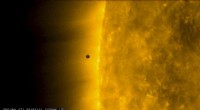
* Transit Method: Detecting dips in starlight as a planet passes in front of its star. This method is biased towards large planets close to their stars.
* Radial Velocity Method: Looking for wobbles in a star's motion caused by a planet's gravity. This is better for larger planets, but still has limitations.
* Planet Diversity: We're finding that planets come in many sizes, compositions, and orbital configurations. This suggests there are likely many more types of planets we haven't even thought of yet.
* Ongoing Discoveries: We're discovering new planets all the time! There are likely countless more waiting to be found with more advanced telescopes and detection methods.
So, how many undiscovered planets might there be? It's impossible to say for sure, but estimates range from billions to trillions in our galaxy alone.
The search for new planets is an exciting field that continues to reveal the incredible diversity of our universe.