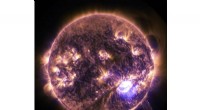
* Stars are giant balls of hot gas that generate their own light and heat through nuclear fusion. In their core, hydrogen atoms fuse together to form helium, releasing enormous amounts of energy. This process makes stars shine brightly and gives them their immense gravitational pull.
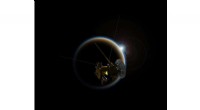
* Planets are celestial bodies that orbit stars and are much smaller than stars. They do not produce their own light or heat; instead, they reflect the light from their host star. Planets are made up of various materials like rock, ice, gas, or a combination of these.
Here's a table summarizing the key differences:
| Feature | Star | Planet |
|---|---|---|
| Energy Source | Nuclear fusion | Reflects light from a star |
| Size | Much larger than planets | Smaller than stars |
| Light and Heat | Produces its own | Reflects light from a star |
| Composition | Mostly hydrogen and helium | Rock, ice, gas, or combinations |
| Gravity | Very strong | Relatively weak |
In short: Stars are like giant furnaces, while planets are like giant rocks orbiting these furnaces.