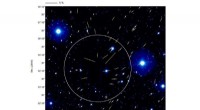
1. The Star 109 Piscium (HD 224693): This star is the brightest in Phoenix. It's a K-type giant star, meaning it's older and cooler than our Sun, but much larger.
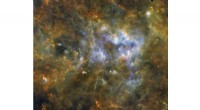
2. The Globular Cluster NGC 6397: This cluster is one of the closest globular clusters to Earth, making it a favorite target for astronomers. It's home to a vast population of stars, tightly packed together, and offers insights into the evolution of stars and galaxies.
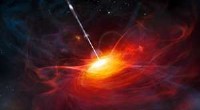
3. The Galaxy NGC 6251: This is a barred spiral galaxy that's relatively close to us. It's classified as a Seyfert galaxy, meaning it has a very active nucleus, likely containing a supermassive black hole.
4. The Dwarf Galaxy Phoenix: While not visible to the naked eye, this small dwarf galaxy is associated with the constellation. It's a satellite galaxy of the Milky Way and is of interest to astronomers studying galaxy evolution.
5. Mythology: The constellation Phoenix, representing the mythical bird that rises from its ashes, is associated with rebirth and renewal. This makes it a popular choice for astrologers and those interested in symbolism.
While not a constellation overflowing with bright stars or easily visible objects, Phoenix offers some fascinating astronomical features for observation and study.