1. Age of the Universe: Hubble helped refine the age of the universe to approximately 13.8 billion years.
2. Expansion of the Universe: It confirmed the accelerating expansion of the universe, leading to the discovery of dark energy.
3. Early Universe: Hubble provided images of distant galaxies and quasars, allowing astronomers to study the early universe and the evolution of galaxies.
4. Formation of Stars and Planets: It captured detailed images of star-forming regions, revealing the intricate processes of star birth and planet formation.
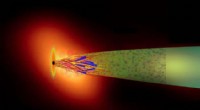
5. Black Holes: Hubble has provided evidence for supermassive black holes at the centers of galaxies, including our own Milky Way.
6. Planetary Atmospheres: It has studied the atmospheres of planets within our solar system and beyond, providing insights into their composition and climate.
7. Exoplanet Discoveries: Although not its primary mission, Hubble has contributed to the discovery of exoplanets, planets orbiting stars other than our Sun.
8. Cosmic Distance Ladder: Hubble played a crucial role in calibrating the cosmic distance ladder, a system for measuring distances in the universe.
9. Public Engagement: Hubble's breathtaking images have captivated the public and inspired generations to explore the wonders of space.
10. Technological Advancements: The telescope's technology has paved the way for future space telescopes, such as the James Webb Space Telescope.
Specific Examples:
* Deep Field Images: Hubble's deep field images, taken by pointing the telescope at seemingly empty patches of sky for extended periods, revealed thousands of distant galaxies, providing a glimpse into the early universe.
* Pillars of Creation: The iconic Pillars of Creation image captured by Hubble showcased the birth of stars within a massive cloud of gas and dust in the Eagle Nebula.
* Supernova 1987A: Hubble provided detailed observations of the aftermath of a supernova explosion, revealing the expanding shockwave and the formation of a new star.
Overall, the Hubble Space Telescope has transformed our understanding of the cosmos. Its legacy will continue to inspire future generations of astronomers and scientists.