Here's why:
* Different Types of Missions: Some missions primarily focus on astronomy and are considered space telescopes (like Hubble). Others might have a broader focus but still use telescopes to collect data (like the International Space Station).
* Active vs. Inactive: Some telescopes might be technically functional but not actively collecting data due to maintenance, funding cuts, or other reasons.
However, we can list some prominent space telescopes currently in operation:
* Hubble Space Telescope: A well-known icon of space astronomy.
* James Webb Space Telescope: Launched in 2021, it's revolutionizing our understanding of the early universe.
* Chandra X-ray Observatory: Studies celestial objects emitting X-rays.
* Spitzer Space Telescope: Retired in 2020, but contributed significantly to infrared astronomy.
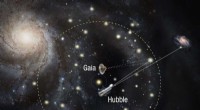
* Gaia: Mapping the Milky Way with unprecedented precision.
* SOHO (Solar and Heliospheric Observatory): Observing the Sun.
* Kepler Space Telescope: Discovered thousands of exoplanets.
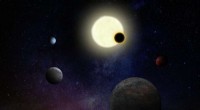
* TESS (Transiting Exoplanet Survey Satellite): Finding planets outside our solar system.
This is just a partial list, and there are many other spacecraft with telescopes onboard, including those focused on Earth observation, planetary science, and more.
To get a more accurate count, you could consult databases from space agencies like NASA and ESA, but even then, the definition of "space telescope" might vary.