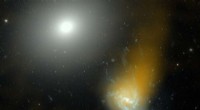
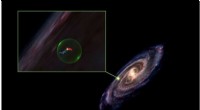
1. Shifting the Perspective: Before Hubble, most astronomers believed the Milky Way galaxy was the entire universe. The Andromeda nebula, as it was then known, was thought to be a cloud of gas within our galaxy. Hubble's discovery that Andromeda was a separate galaxy, millions of light-years away, expanded the known universe dramatically.
2. Cepheid Variables and Distance Measurement: Hubble used Cepheid variable stars, which pulsate at a rate directly related to their brightness, to measure the distance to Andromeda. This technique allowed astronomers to measure distances to other galaxies, revolutionizing our understanding of the universe's scale.
3. The Expanding Universe: Hubble's further observations of distant galaxies revealed that they were moving away from us, and the farther away they were, the faster they were moving. This discovery led to the theory of an expanding universe, and the concept of the Big Bang.
In summary:
* Hubble's discovery of Andromeda's distance showed that our galaxy was not alone, proving the existence of other galaxies beyond our own.
* His use of Cepheid variables allowed for accurate distance measurements to other galaxies, leading to a more precise understanding of the universe's vastness.
* His observations of redshift, the Doppler effect of light from distant galaxies, led to the groundbreaking theory of the expanding universe.
Hubble's work fundamentally changed our perception of the universe, demonstrating that it is far larger and more dynamic than previously imagined. His discoveries laid the foundation for modern cosmology and continue to shape our understanding of the universe today.