* Sound needs a medium: Sound waves are vibrations that travel through a medium like air, water, or solids. The vast emptiness of space has practically no particles for sound waves to propagate through.
* Different frequencies: Even if there were a medium, the frequencies of any potential sounds from planets orbiting would be incredibly low and slow. Our ears are only designed to hear a narrow range of frequencies, so we wouldn't be able to perceive them.
However, there are some ways we can "hear" the sounds of planets and other celestial objects:
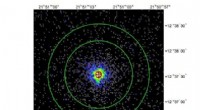
* Data sonification: Scientists can convert data from space telescopes and other instruments into sound. For example, they might convert the variations in light intensity from a distant star into audible tones, creating a "sound" that represents the star's activity.
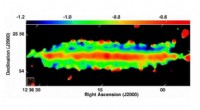
* Radio waves: Some celestial objects emit radio waves, which can be detected by radio telescopes and then converted into sound waves that humans can hear.
In conclusion: While planets don't make sounds in the traditional sense, we can use data and technology to create auditory representations of their movements and activity in space.