Here's why:
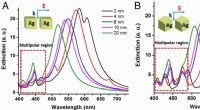
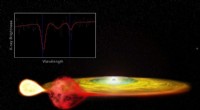
* Spectroscopy: Analyzing the spectrum of light emitted or absorbed by a celestial object reveals its chemical composition, temperature, and even its movement (redshift or blueshift).
* Photometry: Measuring the intensity of light at different wavelengths helps determine the object's brightness, size, and distance.
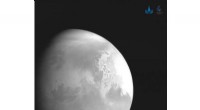
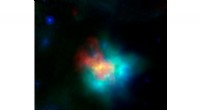
* Imaging: Capturing images of celestial objects allows astronomers to study their shape, surface features, and even the distribution of matter within them.
Other patterns astronomers study:
* Gravitational lensing: The bending of light around massive objects creates patterns that reveal the distribution of dark matter.
* Polarization: The orientation of light waves can reveal information about magnetic fields in space.
* Radio waves: These waves emitted by celestial objects provide insights into their structure, composition, and activity.
By analyzing these patterns, astronomers unlock a wealth of information about the universe and its celestial bodies.