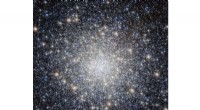
Imagine you're looking at the night sky. Some stars appear bright, others dim. This perceived brightness is called apparent magnitude. It's how bright a star *appears* to us on Earth, which depends on two factors:
1. Intrinsic Luminosity: How much light the star actually emits. A star that burns hotter and bigger will naturally be brighter.
2. Distance: The closer a star is, the brighter it appears. A distant, incredibly bright star might look dimmer than a closer, less luminous one.
Apparent magnitude uses a backwards scale: Smaller numbers mean brighter objects, with the brightest stars having negative magnitudes. For example, Sirius (the brightest star in our sky) has an apparent magnitude of -1.46.
But what if we want to compare stars' true brightness, independent of distance? That's where absolute magnitude comes in.
Absolute magnitude is the brightness a star would have if it were placed 10 parsecs (32.6 light-years) away from Earth. This standardizes the distance, allowing for a fair comparison of intrinsic luminosity.
Here's a simple analogy: Imagine two light bulbs, one 100 watts and one 50 watts. At a close distance, both might seem equally bright. But if you move them far away, the 100-watt bulb would still be brighter, revealing its higher luminosity. Absolute magnitude does the same for stars, allowing us to compare their actual power output.
Key Differences:
* Apparent magnitude: How bright a star appears to us on Earth.
* Absolute magnitude: How bright a star would appear from a standard distance of 10 parsecs.
Understanding both apparent and absolute magnitude helps us:
* Compare the true brightness of stars: We can now understand if a dim-looking star is actually a giant, distant star or a small, nearby one.
* Study stellar evolution: Comparing the absolute magnitudes of stars allows astronomers to understand how stars change over time.
* Estimate distances: By comparing a star's apparent and absolute magnitudes, we can estimate how far away it is.
So, next time you look up at the stars, remember that their apparent brightness only tells part of the story. There's a hidden world of luminosity waiting to be discovered!