Here's why:
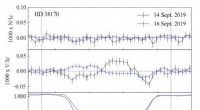
* Most stars have planets: We know that many stars have planets orbiting them, and we're constantly discovering more through telescopes like Kepler and TESS. It's highly likely that most, if not all, stars host some kind of planetary system.
* Other objects: Stars can also have other objects orbiting them besides planets, like:
* Moons: Some planets have their own moons, which technically orbit the star indirectly.
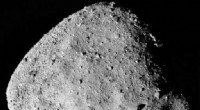
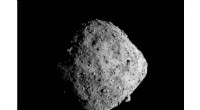
* Asteroids and comets: These objects are much smaller than planets but can still orbit a star.
* Dust and gas: Even if a star doesn't have planets, it may still be surrounded by a disk of dust and gas.
* Isolated stars: There are some stars that appear to be completely isolated, meaning they don't have any known companions.
So, the short answer is: Most stars likely have something orbiting them, but it's not guaranteed for every single star.
It's a fascinating topic, and we're constantly learning more about the diversity of planetary systems in our galaxy!