* Stars: The most common outcome of a nebula collapsing is the formation of stars. Gravity pulls the gas and dust together, increasing density and temperature until nuclear fusion ignites in the core, creating a star.
* Planetary systems: As a star forms, the surrounding disk of gas and dust can clump together to form planets, moons, asteroids, and comets. Our own solar system is believed to have formed from such a disk around the Sun.
* Brown dwarfs: These are "failed stars" that are too small to ignite nuclear fusion in their cores. They are often formed in the same process as stars, but with less material available.
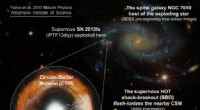
* Supernova remnants: When massive stars die, they explode in a supernova, scattering material back into space. This material can form new nebulae, starting the cycle again.
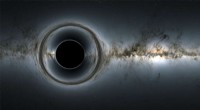
* Black holes: The collapse of the most massive stars can lead to the formation of black holes, incredibly dense objects with gravitational pull so strong that not even light can escape.
So, nebulae are not just the birthplace of stars, but also of the entire ecosystem of objects that we see in space.