Here's a breakdown:
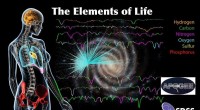
* Hydrogen (H): This is the most abundant element in the universe and the primary fuel for stars. Nuclear fusion of hydrogen atoms into helium releases enormous amounts of energy, providing the light and heat of a star.
* Helium (He): The second most abundant element, helium is a product of hydrogen fusion.
* Heavier Elements: These are present in much smaller quantities, but play important roles in the formation and evolution of stars. Examples include carbon, oxygen, nitrogen, and iron. These elements are created in the core of stars during their lifetime through various nuclear reactions.
How it becomes a star:
1. Gravity: A cloud of gas and dust in space, known as a nebula, starts to collapse under its own gravity.
2. Density and Temperature Increase: As the cloud collapses, it becomes denser and hotter.
3. Protostar: When the temperature and density are high enough, a protostar forms at the center of the collapsing cloud.
4. Nuclear Fusion: At extremely high temperatures and pressures in the core of the protostar, hydrogen atoms begin to fuse into helium, releasing energy. This marks the birth of a star.
So, the material in the center of a nebula that becomes a star is essentially the raw ingredients for a star's creation and energy source. The process of star formation is complex and involves various physical and chemical interactions, but ultimately, the core of a star is born from the vast and diffuse gas and dust of a nebula.