Stars:
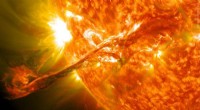
* Sun: Our own star.
* Sirius: The brightest star in the night sky.
* Polaris: The North Star, used for navigation.
* Proxima Centauri: The closest star to our Sun.
* Betelgeuse: A red supergiant in Orion.
* Rigel: Another bright star in Orion.
* Vega: A bright star in the constellation Lyra.
* Arcturus: A bright orange giant in the constellation Boötes.
Planets:
* Mercury: The smallest and fastest planet.
* Venus: The hottest planet.
* Earth: Our home planet.
* Mars: The "Red Planet."
* Jupiter: The largest planet.
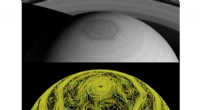
* Saturn: Famous for its rings.
* Uranus: An ice giant.
* Neptune: The outermost planet in our solar system.
* Exoplanets: Planets outside our solar system.
Moons (Natural Satellites):
* Luna: Earth's moon.
* Ganymede: Jupiter's largest moon (and the largest in the solar system).
* Titan: Saturn's largest moon, with a dense atmosphere.
* Callisto: One of Jupiter's four largest moons.
* Europa: Another of Jupiter's large moons, thought to have a subsurface ocean.
Other Celestial Objects:
* Asteroids: Rocky bodies orbiting the Sun, mostly found in the asteroid belt.
* Comets: Icy bodies that release gas and dust when they approach the Sun, creating tails.
* Meteors: Small particles of debris that burn up in the Earth's atmosphere, creating "shooting stars."
* Meteorites: Meteors that survive their passage through the atmosphere and strike the Earth.
* Galaxies: Large collections of stars, gas, and dust held together by gravity. (e.g., the Milky Way)
* Nebulae: Clouds of gas and dust in space, often where stars are born.
* Black Holes: Regions of spacetime where gravity is so strong that nothing, not even light, can escape.
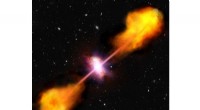
* Quasars: Extremely bright, distant objects powered by supermassive black holes.
Important Note: This is just a small sampling of the countless heavenly bodies in the vastness of space. There are many more fascinating objects waiting to be discovered and named.