* Temperature:
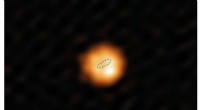
* Blue stars are hotter than red stars. The color of a star is related to its surface temperature. Blue stars have surface temperatures of around 10,000 degrees Celsius or more, while red stars are cooler, around 3,500 degrees Celsius.
* Mass:
* Blue stars are more massive than red stars. Hotter stars require more gravity to hold themselves together, and that gravity comes from greater mass.
* Lifetime:
* Blue stars have shorter lifetimes than red stars. Massive, hot stars burn through their fuel much faster than smaller, cooler stars.
Other possible factors:
* Luminosity: Blue stars are generally much more luminous (brighter) than red stars.
* Size: Blue stars are typically smaller than red stars, even though they are much more massive. This is because their intense gravity compresses their material.
* Composition: While stars are mostly hydrogen and helium, the specific composition can influence color slightly. However, the color difference between a blue and red star is primarily due to temperature.
Important Note: These conclusions are based on the stars' apparent color as seen from Earth. The color can be affected by factors like interstellar dust, which can make stars appear redder than they actually are.