Celestial Objects:
* Stars: Their formation, evolution, life cycles, and properties like temperature, luminosity, and composition.
* Planets: Formation, atmospheres, surface features, and the potential for life.
* Galaxies: Their structure, evolution, and interactions with each other.
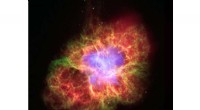
* Nebulae: Clouds of gas and dust where stars are born.
* Black Holes: Mysterious objects with incredibly strong gravity that can devour matter.
* Supernovae: Exploding stars that mark the end of some stars' lives.
* Quasars: Extremely bright and distant objects powered by supermassive black holes.
Physical Processes:
* Gravity: The force that governs the movement of celestial objects.
* Electromagnetism: The force that governs light and other electromagnetic radiation.
* Nuclear Physics: The processes that power stars and other celestial objects.
* Cosmology: The study of the origin, evolution, and structure of the universe as a whole.
Using various tools and techniques:
* Telescopes: To observe the universe across different wavelengths of light (optical, infrared, radio, X-ray, etc.).
* Computer simulations: To model and understand complex astrophysical processes.
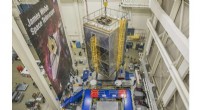
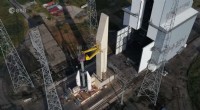
* Spacecraft missions: To explore planets, moons, and other objects in our solar system and beyond.
Ultimately, astronomers seek to answer fundamental questions about:
* The origin and evolution of the universe.
* The existence of life beyond Earth.
* The laws of physics that govern the cosmos.
So, while the specific focus may vary, astronomers are always working to unravel the mysteries of the universe and expand our understanding of our place in it.