1. Binary Star Systems:
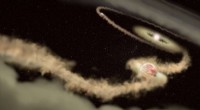
* Kepler's Third Law: This method relies on observing a star system where two stars orbit each other. By measuring the orbital period and the distance between the stars, we can calculate the combined mass of the system.
* Doppler Spectroscopy (Radial Velocity Method): This technique observes the "wobble" in a star's light caused by the gravitational pull of its companion. The amplitude of the wobble tells us about the companion's mass.
2. Stellar Evolution Models:
* Hertzsprung-Russell Diagram (HR Diagram): This diagram plots stars based on their luminosity and temperature. By comparing a star's position on the HR diagram to theoretical models, we can estimate its mass.
3. Gravitational Microlensing:
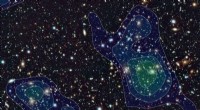
* Einstein's Theory of General Relativity: This method uses the phenomenon of gravitational lensing. When a massive object (like a star) passes in front of a distant star, it bends the light from the distant star, creating multiple images. By analyzing the images, we can determine the mass of the lensing object.
4. Asteroseismology:
* Starquakes: Stars exhibit oscillations similar to earthquakes. By studying these oscillations (specifically their frequencies), we can gain insights into the star's internal structure and mass.
5. Direct Imaging and Interferometry:
* High-resolution Imaging: Directly imaging a star's surface and atmosphere can provide information about its size and mass, especially for young, large stars.
* Interferometry: Combining light from multiple telescopes creates a virtual telescope with a much larger aperture, allowing for higher resolution and the ability to measure the star's diameter and infer its mass.
Note: Each method has its own limitations. For example, binary star systems require careful observation, while stellar evolution models rely on assumptions about star formation.