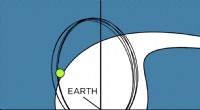
* They orbit the Sun: All planets in our solar system revolve around the Sun due to its gravitational pull. This is the most fundamental similarity between them.
* They are mostly composed of gas and dust: Both inner and outer planets formed from the same protoplanetary disk, a cloud of gas and dust surrounding the young Sun. While the inner planets retained more solid material, the outer planets are primarily composed of lighter elements like hydrogen and helium.
* They are spherical in shape: All planets, regardless of their size or composition, are roughly spherical due to gravity pulling their mass evenly towards the center.
* They experience seasons: Both inner and outer planets experience changes in their seasons, though the duration and severity of these changes can vary greatly due to factors like axial tilt and orbital eccentricity.
* They have magnetic fields: While the strength and nature of magnetic fields vary, both inner and outer planets have magnetic fields. These fields are generated by the movement of electrically charged particles within their interiors.
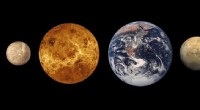
It's important to remember that these similarities are broad, and many other differences exist between inner and outer planets. For example, the inner planets are rocky and solid, while the outer planets are primarily gaseous.