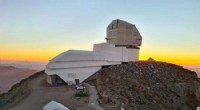
* Reduce atmospheric distortion: The Earth's atmosphere bends and distorts light from space, making objects appear blurry. Higher altitudes have less air above the telescope, resulting in clearer images.
* Minimize light pollution: City lights and other artificial sources of light interfere with astronomical observations. Mountains are often more remote and have less light pollution.
* Improve seeing conditions: The turbulence in the atmosphere causes twinkling of stars and makes it difficult to obtain sharp images. Higher altitudes have less atmospheric turbulence, leading to better "seeing" conditions.
* Access better weather: Higher altitudes have drier air and fewer clouds, which allows for more observing time.
In summary, mountains provide a combination of factors that make them ideal locations for astronomical observatories.