The desire to explore the cosmos has driven humanity for centuries. While telescopes allowed us to observe from afar, it was the invention of space probes that allowed us to truly reach out and touch the celestial bodies around us. Here's a brief timeline of the fascinating history of space probes:
Early Days: The Dawn of Exploration (1950s-1960s)
* 1957: Sputnik 1, the first artificial satellite, launched by the Soviet Union, marked the beginning of the space race.
* 1959: Luna 2 becomes the first spacecraft to reach the surface of another celestial body - the Moon.
* 1960: Explorer 6 captures the first images of Earth from space.
* 1962: Mariner 1 fails to reach Venus due to a coding error, a stark reminder of the challenges of space exploration.
* 1962: Mariner 2 becomes the first successful flyby of another planet, Venus.
* 1964: Ranger 7 transmits the first close-up images of the Moon.
* 1965: Mariner 4 sends back the first close-up images of Mars.
* 1965: Luna 9 becomes the first spacecraft to soft-land on the Moon.
* 1966: Luna 10 becomes the first spacecraft to orbit the Moon.
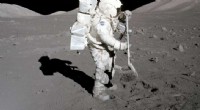
* 1969: Apollo 11 lands the first humans on the Moon, marking a pinnacle of space exploration.
Exploring the Solar System (1970s-1990s)
* 1970s: Pioneer 10 and 11 flyby Jupiter and Saturn, providing unprecedented views of these gas giants.
* 1971: Mariner 9 enters orbit around Mars, becoming the first spacecraft to orbit another planet.
* 1972: Pioneer 10 becomes the first spacecraft to cross the asteroid belt.
* 1973: Mariner 10 conducts flybys of Venus and Mercury, offering groundbreaking data about these planets.
* 1975: Viking 1 and 2 land on Mars, searching for signs of life and making significant discoveries about the red planet's geology.
* 1979: Voyager 1 and 2 launch on a grand tour of the outer solar system, revealing the complexities of Jupiter, Saturn, Uranus, and Neptune.
* 1986: Giotto becomes the first spacecraft to flyby Halley's Comet, capturing spectacular images of its nucleus.
* 1990: Magellan maps the surface of Venus using radar, uncovering its volcanic landscape.
* 1997: Mars Pathfinder lands on Mars and deploys the first rover, Sojourner, exploring the Martian surface.
Into the New Millennium: Expanding Horizons (2000s-present)
* 2001: NEAR Shoemaker becomes the first spacecraft to orbit an asteroid, Eros.
* 2004: Spirit and Opportunity land on Mars and conduct extensive exploration, revealing evidence of past liquid water.
* 2005: Cassini enters orbit around Saturn, sending back breathtaking images of its rings and moons, including the discovery of Enceladus' geysers.
* 2006: New Horizons launches on a mission to Pluto and the Kuiper belt, revolutionizing our understanding of these distant worlds.
* 2011: Juno launches on a mission to study Jupiter's atmosphere and magnetic field.
* 2014: Rosetta becomes the first spacecraft to land on a comet, Churyumov-Gerasimenko, providing valuable data about the formation of the solar system.
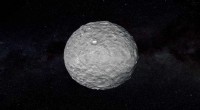
* 2015: Dawn orbits Ceres, the largest object in the asteroid belt, uncovering its intriguing surface features.
* 2016: InSight lands on Mars to study its interior and seismic activity.
* 2020: Perseverance lands on Mars, carrying the Ingenuity helicopter, the first aircraft to fly on another planet.
* 2021: Lucy launches on a mission to study Jupiter's Trojan asteroids, revealing their diverse nature.
Future Missions:
The exploration of space continues with ambitious missions planned for the future, such as:
* James Webb Space Telescope: A powerful infrared telescope designed to observe the early universe.
* JWST's successor, expected to launch in the late 2030s or early 2040s.
* SpaceX Starship: A reusable spacecraft designed for deep space missions, including potential voyages to Mars.
* Europa Clipper: A mission to study Jupiter's moon Europa, a potential haven for life.
The future holds even more exciting discoveries as we continue to unravel the mysteries of the cosmos through the remarkable journey of space probes.