Here are some notable landings by space probes:
Planets:
* Venus: Several Soviet Venera probes landed on Venus in the 1970s and 80s.
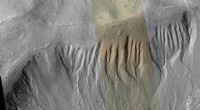
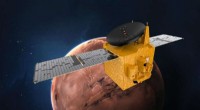
* Mars: Numerous probes have landed on Mars, including the American rovers Sojourner, Spirit, Opportunity, Curiosity, and Perseverance, as well as the InSight lander.
* Titan (moon of Saturn): The Huygens probe, carried by the Cassini mission, landed on Titan in 2005.
Moons:
* The Moon: Numerous probes, including the Soviet Luna series and the American Apollo missions, landed on the Moon.
* Titan (moon of Saturn): As mentioned above, the Huygens probe landed on Titan.
* Europa (moon of Jupiter): No probe has landed on Europa yet, but missions are being planned.
Asteroids:
* Itokawa: The Japanese Hayabusa probe landed on the asteroid Itokawa in 2005, collecting samples that were returned to Earth.
* Ryugu: The Japanese Hayabusa2 probe landed on the asteroid Ryugu in 2018 and 2019, collecting samples that were returned to Earth.
* Bennu: The American OSIRIS-REx probe landed on the asteroid Bennu in 2020, collecting samples that are currently on their way back to Earth.
Comets:
* Churyumov-Gerasimenko: The European Rosetta mission's Philae lander touched down on the comet Churyumov-Gerasimenko in 2014.
This is not an exhaustive list, but it highlights some of the most significant landings of space probes.
It's worth noting that space exploration is ongoing, and more landings on celestial bodies are planned for the future.