* Jupiter: Jupiter's auroras are the largest and most powerful in the solar system, fueled by the planet's immense magnetic field and its volcanic moon Io.
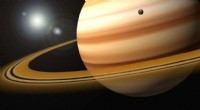
* Saturn: Saturn also has auroras, which are less intense than Jupiter's but still impressive. They are primarily caused by interactions with the solar wind and Saturn's own magnetic field.
* Uranus and Neptune: Both these ice giants have auroras, although they are challenging to observe due to their distance from Earth.
* Venus: While Venus has a very thin atmosphere and no global magnetic field, it still exhibits a type of aurora called "proton aurora". This happens when the solar wind interacts directly with the planet's upper atmosphere.
Key factors for auroras:
* Magnetic field: A planet needs a strong magnetic field to deflect charged particles from the solar wind.
* Atmosphere: The charged particles from the solar wind interact with atoms and molecules in the atmosphere, causing them to emit light.
So, while Earth's auroras are perhaps the most famous, other planets in our solar system also have their own unique and dazzling displays of light!