1. Initial Mass: The most crucial factor influencing a star's life is its initial mass.
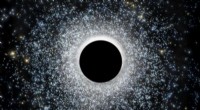
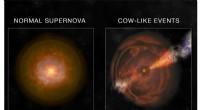
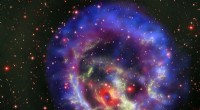
* Massive Stars: Stars with much higher mass than our Sun (8 times or more) have incredibly short lifespans (millions of years) but burn brightly and hot, fusing heavier elements like carbon and oxygen. They end their lives in spectacular supernova explosions, leaving behind black holes or neutron stars.
* Intermediate-Mass Stars: Stars like our Sun (0.8 to 8 times the Sun's mass) have lifespans of billions of years. They fuse hydrogen into helium and eventually evolve into red giants before shedding their outer layers, leaving behind a white dwarf.
* Low-Mass Stars: Stars smaller than our Sun (less than 0.8 times the Sun's mass) burn very slowly and have lifespans of trillions of years. They fuse hydrogen into helium but never become red giants, instead directly becoming white dwarfs.
2. Chemical Composition: The initial chemical composition of a star also influences its evolution. Stars with a higher proportion of heavier elements (like metals) may have slightly shorter lifespans due to higher opacity, leading to increased pressure and faster fusion rates.
3. Rotation: A star's rotation rate can affect its magnetic fields, influencing its stellar wind and potential mass loss.
4. Binary Companions: Stars in binary systems can interact gravitationally, influencing each other's evolution. This can lead to mass transfer, causing one star to evolve faster than it normally would.
5. Nuclear Fusion: The process of nuclear fusion is the engine driving a star's evolution. The fusion of hydrogen into helium in the core releases tremendous amounts of energy, which creates outward pressure to counter the inward force of gravity. As the star evolves, it fuses heavier elements, changing its structure and internal energy production.
Here's a brief summary of a star's life cycle:
1. Protostar: A star forms from a cloud of gas and dust that collapses under its own gravity.
2. Main Sequence: The star enters a stable phase where it fuses hydrogen into helium in its core. This is the longest phase of a star's life, and it's where the star shines brightly.
3. Red Giant: As hydrogen fuel in the core is depleted, the star begins to expand and cool, becoming a red giant.
4. Later Stages: The star undergoes various phases depending on its mass:
* Massive stars: Explode as supernovae.
* Intermediate-mass stars: Evolve into white dwarfs.
* Low-mass stars: Become white dwarfs directly.
Key Points to Remember:
* A star's evolution is a continuous process, determined by its initial mass and composition.
* Stars spend most of their lives on the main sequence, fusing hydrogen into helium.
* Stars evolve differently based on their mass, leading to various final fates.
Note: This is a simplified explanation. Stellar evolution is a complex process with many nuances and variations.