The Milky Way galaxy, our cosmic home, is estimated to contain between 100 and 400 billion stars. That's a mind-boggling number, and it's only a fraction of the estimated 100 billion galaxies in the observable universe!
Here are some key elements that make up this vast celestial collection:
1. Stars: The most obvious component, of course! These stellar furnaces come in various sizes, colors, and ages. They provide light, heat, and the raw materials for the formation of planets and other celestial bodies.
2. Gas and Dust: Interstellar medium (ISM) fills the space between stars, composed mainly of hydrogen and helium. This gas and dust are crucial for the formation of new stars.
3. Nebulae: These are giant clouds of gas and dust, often illuminated by nearby stars. They can be nurseries for new stars or the remnants of dying stars.
4. Black Holes: Lurking at the center of our galaxy is a supermassive black hole, Sagittarius A*. These enigmatic objects possess such immense gravity that not even light can escape their pull.
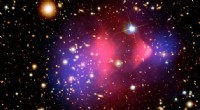
5. Dark Matter: While we can't directly observe it, dark matter is believed to make up a significant portion of the Milky Way's mass. Its gravitational influence shapes the galaxy's structure and dynamics.
6. Globular Clusters: These are spherical collections of hundreds of thousands of stars, tightly bound together by gravity. They are ancient and provide valuable clues about the early evolution of our galaxy.
7. Open Clusters: Looser and younger than globular clusters, open clusters often contain a few hundred stars and are found within the Milky Way's spiral arms.
8. Galactic Disk: The flat, rotating disk where most of the Milky Way's stars, gas, and dust reside. This is where our solar system is located.
9. Galactic Bulge: A dense, spherical region at the center of the disk, containing older stars and a higher concentration of stars than the disk.
10. Galactic Halo: A large, spherical region surrounding the disk, containing old stars, globular clusters, and dark matter.
Exploring the Milky Way:
Scientists use various techniques to study our galaxy, including:
* Observing stars: Analyzing their light to determine their properties (age, temperature, composition).
* Mapping the distribution of gas and dust: Using radio telescopes and infrared telescopes.
* Studying the motions of stars and gas: To understand the galaxy's rotation and gravitational dynamics.
The Milky Way continues to surprise us with its complexity and beauty. As we continue to explore it, we uncover more secrets about its formation, evolution, and place in the grand scheme of the universe.