* Sunlight: Sunlight contains all the colors of the rainbow, but appears white to our eyes because it's a mix of all those colors.
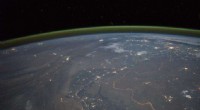
* Atmosphere: The Earth's atmosphere is filled with tiny particles, mainly nitrogen and oxygen molecules. These molecules are much smaller than the wavelengths of visible light.
* Scattering: When sunlight enters the atmosphere, it interacts with these particles. Shorter wavelengths of light, like blue and violet, are scattered more easily than longer wavelengths like red and orange. This is called Rayleigh scattering.
* Sunset: During the day, sunlight travels a shorter distance through the atmosphere, so we see more of the scattered blue light, giving the sky its familiar blue color. However, at sunset, sunlight has to travel through a much larger portion of the atmosphere to reach us. As the sun dips below the horizon, the blue light is scattered away, leaving behind the longer wavelengths of red, orange, and yellow, which reach our eyes.
Additional Factors:
* Clouds and Dust: The presence of clouds and dust particles in the atmosphere can also contribute to the colors we see at sunset. These larger particles scatter all colors of light more equally, resulting in more vibrant colors.
* Time of Year: The angle of the sun in the sky also affects the colors we see. During the summer, the sun is higher in the sky, so the light travels through less atmosphere, resulting in less scattering and less vibrant colors. In the winter, the sun is lower in the sky, leading to more scattering and more vibrant colors.
In summary, the vibrant colors at sunset are a result of the longer wavelengths of sunlight being scattered less by the atmosphere, reaching our eyes directly.