Exoplanets:
* Direct Imaging: We're getting better at directly imaging planets around other stars, giving us unprecedented views of their atmospheres and even potential signs of life.
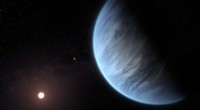
* Exoplanet Atmospheres: Studying the atmospheres of exoplanets is revealing details about their composition, temperature, and even potential habitability.
* Unusual Worlds: We're finding exoplanets unlike anything in our solar system, like "super-Earths" and "mini-Neptunes," pushing our understanding of planetary formation.
Black Holes and Neutron Stars:
* Black Hole Images: The Event Horizon Telescope has captured the first images of black holes, providing direct evidence of their existence and confirming Einstein's theory of general relativity.
* Gravitational Waves: Continued detections of gravitational waves from merging black holes and neutron stars are helping us understand the evolution of the universe and the properties of these extreme objects.
* Neutron Star Mysteries: The behavior of neutron stars remains a puzzle. Ongoing observations are helping us unravel their internal structure, magnetic fields, and their role in cosmic explosions like supernovae.
Our Solar System:
* Pluto's Complex Geology: Missions like New Horizons have revealed Pluto's diverse surface, with mountains, plains, and even a possible subsurface ocean.
* Mars Exploration: Rovers like Curiosity and Perseverance are uncovering evidence of past liquid water on Mars, potentially supporting the possibility of ancient life.
* Jupiter's Giant Red Spot: Recent observations show the Great Red Spot shrinking and changing shape, raising questions about its long-term stability.
Beyond the Visible:
* Dark Matter and Dark Energy: We're still searching for the nature of dark matter and dark energy, which make up the majority of the universe's mass and energy, respectively.
* Cosmic Microwave Background: Studying the faint afterglow of the Big Bang, the cosmic microwave background radiation, provides crucial insights into the early universe and its evolution.
Ongoing Research:
* James Webb Space Telescope: This powerful new telescope is revolutionizing our understanding of the early universe, star formation, and exoplanet atmospheres.
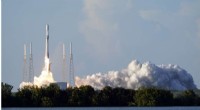
* Future Missions: Missions like the Europa Clipper (to Jupiter's moon Europa), the Psyche mission (to a metallic asteroid), and the Lunar Gateway (a space station in lunar orbit) promise new discoveries.
Stay updated!
The world of space exploration is constantly evolving. To stay up-to-date on the latest discoveries, I recommend following:
* Space news websites: NASA, ESA, Space.com, and Scientific American are excellent resources.
* Science journals: Nature, Science, and Astrophysical Journal publish groundbreaking research.
* Social media: Follow NASA, ESA, and other space agencies on social media for the latest updates.
There are countless exciting discoveries waiting to be made in the vastness of space!