Modern science paints a picture of the universe as an incredibly vast, dynamic, and ever-evolving entity. Here's a breakdown:
1. Size and Age:
* The observable universe is estimated to be 93 billion light-years across, though the total size might be infinite.
* It is estimated to be 13.8 billion years old, based on the observation of the cosmic microwave background radiation, which is the afterglow of the Big Bang.
2. Structure:
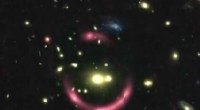
* The universe is composed of vast galactic clusters containing thousands of galaxies, which in turn consist of billions of stars and their accompanying planetary systems.
* There are also nebulae, vast clouds of gas and dust where stars form, and black holes, regions of spacetime where gravity is so strong that nothing, not even light, can escape.
* Recent observations suggest that dark matter and dark energy, mysterious components we can't directly observe, make up the vast majority of the universe's mass and energy.
3. Evolution:
* The universe is not static but constantly evolving.
* The Big Bang theory describes the universe's beginning, a state of extremely high density and temperature, from which it expanded and cooled.
* This expansion continues today, driven by dark energy, and galaxies are constantly moving away from each other.
* Stars are born in nebulae, live for billions of years, and eventually die, leaving behind remnants like white dwarfs, neutron stars, or black holes.
* The universe is filled with cosmic radiation and magnetic fields, remnants of past events and ongoing processes.
4. Fundamental Laws:
* Our understanding of the universe is based on a set of fundamental laws governing its behavior, including:
* Gravity: A force of attraction between any two objects with mass.
* Electromagnetism: A force that governs the interaction of charged particles.
* Nuclear forces: Forces that hold the nucleus of an atom together.
* These laws are expressed through mathematical equations and are subject to constant refinement and testing through observation and experiment.
5. Mysteries and Challenges:
* Despite significant progress, the universe remains a mystery in many ways. We still lack a complete understanding of:
* Dark matter and dark energy: What are they made of? How do they interact with the universe?
* The origin of life: How did life arise from non-living matter?
* The existence of other intelligent life: Are we alone in the universe?
* The ultimate fate of the universe: Will it continue expanding forever, or will it eventually collapse in a Big Crunch?
6. Ongoing Exploration:
* Scientists continue to explore the universe through various means:
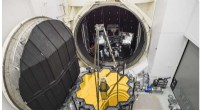
* Observatories on Earth and in space: Collecting light from distant objects to study their properties.
* Spacecraft missions: Sending probes to explore planets and other celestial bodies in our solar system and beyond.
* Theoretical models: Developing mathematical models to explain the observed phenomena and predict future events.
Conclusion:
The universe according to modern science is a vast, ever-evolving, and awe-inspiring place. While we have made significant progress in understanding its fundamental nature, there are still many mysteries to unravel. This ongoing exploration will likely continue to challenge our understanding and expand our knowledge of the universe for generations to come.