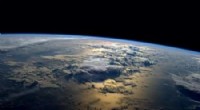
Earth
* Size: Much smaller than the Sun (about 109 times smaller in diameter).
* Composition: Primarily composed of rock, iron, and other heavier elements.
* Energy Source: Internal heat from radioactive decay and external heat from the Sun.
* Atmosphere: Contains gases like nitrogen, oxygen, carbon dioxide, and others.
* Life: Supports a diverse range of life, including plants, animals, and microorganisms.
Sun
* Size: A giant ball of hot gas, much larger than Earth (about 109 times larger in diameter).
* Composition: Primarily composed of hydrogen and helium.
* Energy Source: Nuclear fusion in its core, converting hydrogen into helium and releasing tremendous amounts of energy.
* Atmosphere: Consists of several layers, including the photosphere, chromosphere, and corona.
* Life: Does not support life as we know it.
Similarities:
* Both are celestial bodies: They exist in space and are governed by the laws of physics.
* Both emit radiation: Both Earth and the Sun emit electromagnetic radiation, although the types and amounts differ. The Sun emits much more radiation than Earth, primarily in the form of light and heat.
* Both are constantly in motion: Earth orbits the Sun, and the Sun orbits the center of the Milky Way galaxy.
Overall, the Earth and the Sun are fundamentally different celestial objects. While they share some similarities, their distinct properties create vastly different environments.