Here's what you need to know:
* Plasma: The Sun is made of plasma, which is a superheated state of matter where electrons are stripped from atoms. Think of it as a gas that's so hot it's electrically charged.
* Convection: The Sun's plasma is constantly moving in a process called convection. Hotter plasma rises, cooler plasma sinks, creating swirling patterns.
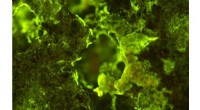
* Granulation: The surface of the Sun is covered in tiny, bright cells called granules. These are the tops of the convection cells, where hot plasma rises and then cools as it spreads out.
* Sunspots: Sunspots are cooler, darker areas on the Sun's surface. They are caused by magnetic fields that suppress convection.
* Solar flares and coronal mass ejections: The Sun also experiences explosive events like solar flares and coronal mass ejections that release huge amounts of energy and particles into space.
So, the Sun doesn't have a "texture" like a rock or a piece of cloth. It's a dynamic, ever-changing ball of plasma with constantly shifting patterns and bursts of energy.