Common Hazards:
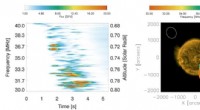
* Solar flares: These intense bursts of energy from the Sun can disrupt satellite communications, power grids, and even cause aurora displays.
* Coronal mass ejections (CMEs): Large explosions on the Sun that release massive amounts of charged particles, which can also disrupt technology and create geomagnetic storms.
* Space debris: Man-made objects orbiting Earth, such as defunct satellites and rocket parts, can collide with operational spacecraft or even re-enter the atmosphere posing a risk.
Less Frequent but Potentially Devastating Hazards:
* Asteroid impacts: Asteroids ranging from the size of pebbles to large boulders can enter Earth's atmosphere. While most burn up, larger objects can cause significant damage.
* Comet impacts: Similar to asteroid impacts, comets can also collide with Earth, although they are less common.
* Gamma-ray bursts: These extremely energetic events, originating from collapsing stars or merging neutron stars, can be extremely dangerous if close enough to Earth. They release immense amounts of energy and can disrupt the atmosphere, potentially causing mass extinctions.
Other considerations:
* Near-Earth objects (NEOs): Any object, including asteroids and comets, that orbits the Sun and comes close to Earth's orbit. Tracking and monitoring these objects is crucial to assess the potential hazard they pose.
* Space weather: The ever-changing conditions in space, including solar activity, solar wind, and magnetic fields, can influence Earth's atmosphere and technology.
It's important to note that while some astronomical hazards are predictable and have mitigation strategies, others are difficult to predict and pose significant challenges. Continuous research and monitoring are crucial for understanding these risks and developing effective solutions to protect our planet.