Here's a breakdown:
* Location: The snow line is located between Mars and Jupiter, approximately 4 AU (astronomical units) from the Sun.
* Significance:
* Inside the snow line: Temperatures were too high for volatile compounds to freeze, so only rocky materials could form planets. This is why the inner planets (Mercury, Venus, Earth, Mars) are primarily rocky.
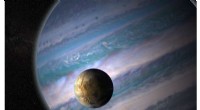
* Outside the snow line: It was cold enough for volatile ices to condense, along with rocky material. This allowed the formation of gas giants (Jupiter, Saturn, Uranus, Neptune) that are predominantly composed of hydrogen and helium, but also contain significant amounts of heavier elements trapped in the icy cores.
* Dynamic: The snow line is not a fixed boundary. Its exact location depends on the temperature of the protoplanetary disk, which in turn depends on the Sun's luminosity. Over time, the snow line can shift, impacting the composition of planets forming in different regions.
In short, the snow line was a key factor in determining the composition and characteristics of planets in our solar system. It separated the inner rocky planets from the outer gas giants.