* Luminous: Stars emit light and heat due to nuclear fusion occurring in their core.
* Plasma: The matter within a star is in a state called plasma, where atoms are ionized and electrons are free to move.
* Hot: Stars are incredibly hot, with surface temperatures ranging from a few thousand to tens of thousands of degrees Celsius.
* Gravity: The intense gravity of a star pulls all its matter inward, creating a balance with the outward pressure from nuclear fusion.
Here's a simpler way to think about it:
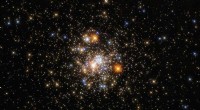
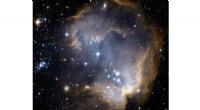
Imagine a giant ball of gas that's so hot and dense that it starts burning, creating light and heat. That's essentially what a star is.
Key characteristics of stars include:
* Size: Stars come in a wide range of sizes, from tiny red dwarfs to massive blue giants.
* Temperature: The color of a star is determined by its temperature, with blue stars being the hottest and red stars being the coolest.
* Luminosity: This refers to how bright a star appears, which depends on its size and temperature.
* Lifetime: Stars have finite lifespans, with massive stars burning through their fuel much faster than smaller ones.
In summary, a star is a self-luminous celestial object powered by nuclear fusion, emitting light and heat as a result.