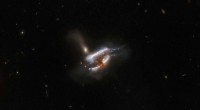
* Vastness: Galaxies are incredibly large, containing billions of stars.
* Discovery Challenges: We can only directly observe a small fraction of the stars in our own galaxy, let alone others. Detecting planets around those stars is even more challenging.
* Diversity: Galaxies vary greatly in size, age, and composition, meaning the number of solar systems could vary widely.
However, we can make some educated guesses:
* Our Milky Way: Astronomers estimate that our galaxy likely has hundreds of billions of stars, and many of those likely have planets orbiting them.
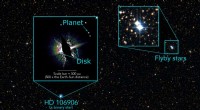
* Exoplanet Discoveries: The Kepler Space Telescope has detected thousands of exoplanets (planets outside our solar system), and ongoing missions are adding to this number rapidly.
* Statistical Estimates: Based on these discoveries, scientists believe that planets are quite common, meaning there could be billions of solar systems in the Milky Way alone.
In conclusion: While we can't give an exact number, the evidence suggests that galaxies likely contain billions of solar systems. The search for exoplanets is ongoing, and our understanding of how many solar systems exist is constantly evolving.