Here's why:
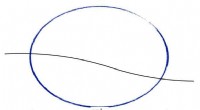
* Kepler's Second Law: This law states that a planet sweeps out equal areas in equal times. Imagine a planet orbiting the sun in an elliptical path. As the planet gets closer to the sun, it needs to move faster to cover the same area in the same time as when it's farther away. This means the planet's orbital speed increases as it approaches the sun.
* Conservation of Angular Momentum: Another way to understand this is through the conservation of angular momentum. Angular momentum is a measure of how much an object is rotating. For a planet orbiting the sun, its angular momentum is constant. As the planet gets closer to the sun, its distance from the axis of rotation (the sun) decreases. To maintain constant angular momentum, the planet's orbital speed must increase.
In simpler terms: Think of a spinning figure skater. When they pull their arms in close to their body, they spin faster. The same principle applies to planets. The closer they are to the sun, the faster they need to move to maintain their orbit.
Note: The speed of a planet's orbit is not solely determined by its distance from the sun. The mass of the sun and the planet's own mass also play a role.