Here's a breakdown of the radiation hazards around Saturn:
* Saturn's Magnetosphere: Saturn's magnetic field is about 1000 times stronger than Earth's. This field traps charged particles, primarily electrons and protons, forming a radiation belt similar to Earth's Van Allen belts, but far more intense.
* Saturn's Moons: Several of Saturn's moons, particularly Enceladus and Titan, are thought to have internal sources of radiation. Enceladus has geysers that spew water vapor and ice particles, which are believed to be charged by the magnetosphere, contributing to the radiation environment.
* Solar Wind: Saturn is also bombarded by the solar wind, a stream of charged particles from the Sun. This adds to the overall radiation environment.
How Dangerous Is This Radiation?
The radiation levels around Saturn are incredibly high, significantly higher than those experienced in Earth's orbit. This poses a significant risk to humans and spacecraft:
* Human Health: The levels of radiation around Saturn would be fatal to humans in a very short period of time. Even a short exposure would cause severe radiation sickness and potentially lead to death.
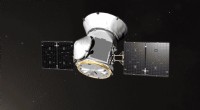
* Spacecraft Damage: The radiation environment around Saturn can damage spacecraft systems, particularly electronic components. This could lead to malfunctions, failures, and even loss of the spacecraft.
It's important to remember that no spacecraft has ever landed on Saturn, and no human has ever visited the planet. The radiation levels are far too high to allow for human exploration or even long-term robotic missions without extensive shielding and radiation protection measures.