Commonalities:
* Mostly Hydrogen and Helium: All outer planets are primarily composed of hydrogen (H2) and helium (He), just like the Sun.
* No Solid Surface: These planets lack a solid surface like Earth. Their atmospheres gradually transition into their internal layers.
* Strong Gravity: The immense gravity of these planets compresses their atmospheres, creating extreme pressures and temperatures deep within.
* Dynamic and Ever-Changing: The atmospheres are constantly in motion, with strong winds, storms, and complex weather patterns.
Individual Characteristics:
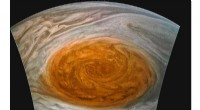
* Jupiter: Known for its Great Red Spot, a giant storm that's lasted for centuries. Its atmosphere is banded with colorful clouds, mainly composed of ammonia, methane, and water. The planet's rapid rotation generates strong winds, creating jet streams.
* Saturn: Similar to Jupiter in composition, Saturn's atmosphere features prominent bands, but less defined than Jupiter's. It also has strong winds, including the famous hexagonal jet stream at its north pole.
* Uranus: Notable for its extreme axis tilt (almost lying on its side), Uranus has a cooler atmosphere compared to Jupiter and Saturn. Its atmosphere is mainly composed of methane, giving it a pale blue color. It has faint, subtle bands and some storm activity.
* Neptune: The windiest planet in the solar system, Neptune features powerful storms and swirling clouds. Its atmosphere is dominated by methane, giving it a deep blue color. It also has a mysterious "Great Dark Spot," similar to Jupiter's Red Spot, but less persistent.
Additional Points:
* Internal Heat Sources: Outer planets generate internal heat from gravitational compression, making their atmospheres warmer than expected based on solar radiation alone.
* Atmospheric Layers: Each outer planet has different layers within its atmosphere, with varying compositions, temperatures, and pressures.
* Aurorae: Just like Earth, these planets have aurorae, caused by charged particles interacting with their magnetic fields.
In conclusion, the outer planets' atmospheres are truly amazing, showcasing the immense diversity of our solar system. They offer incredible opportunities for studying the fundamental processes of planetary evolution and atmosphere dynamics.