1. Size and Mass:
* Our sun is a medium-sized star, classified as a G-type star.
* All-stars can be much larger and more massive than our sun. There are giants, supergiants, and even hypergiants.
2. Temperature and Color:
* Our sun is relatively cool and appears yellow.
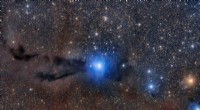
* All-stars can be much hotter and emit different colors. Blue stars are the hottest, while red stars are the coolest.
3. Lifespan:
* Our sun has an estimated lifespan of about 10 billion years.
* All-stars have varying lifespans depending on their size and mass. Larger, more massive stars burn hotter and have shorter lifespans.
4. Luminosity:
* Our sun provides the light and heat for our solar system.
* All-stars can be much more luminous than our sun, radiating significantly more energy.
5. Composition:
* Our sun is primarily composed of hydrogen and helium.
* All-stars can have varying compositions depending on their age, mass, and location in the galaxy.
In summary: The term "all-star" simply refers to a star, not necessarily one with specific properties like our sun. There's a wide range of star types in the universe, with different sizes, colors, temperatures, and lifespans.