Here are some key figures and their contributions:
* Pythagoras (c. 570-495 BC): Although not an Egyptian Greek, Pythagoras is credited with the first theoretical argument for a spherical Earth. His reasoning was based on philosophical and mathematical ideas, not empirical observation.
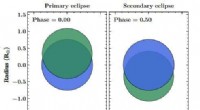
* Aristotle (384-322 BC): He provided several arguments for a spherical Earth, including the observation that the Earth's shadow on the moon during a lunar eclipse is always round, and that different stars are visible at different latitudes.
* Eratosthenes (c. 276-194 BC): This Greek astronomer and mathematician made the first recorded attempt to measure the circumference of the Earth. His method involved comparing the angle of the sun's rays at two different locations on the same day, and he calculated a remarkably accurate value.
It's important to note that:
* While the idea of a spherical Earth was widely accepted among educated Greeks, it wasn't universally proven until much later.
* There were still those who clung to the idea of a flat Earth.
* Modern scientific understanding of the Earth's shape has further developed beyond the simple spherical model.
Therefore, it's inaccurate to claim a single Egyptian Greek scientist "proved" the Earth was round. Instead, the concept evolved through the combined efforts of many thinkers and observers across various civilizations over centuries.