1. Red Giant Phase:
* Core Contraction: Without hydrogen fusion, the core can no longer resist gravity and starts to contract.
* Shell Burning: The contraction heats the outer layers, triggering hydrogen fusion in a shell surrounding the core.
* Expansion: The increased energy output causes the star to expand dramatically, becoming a red giant.
* Luminosity Increase: The star becomes much brighter, even though its core is actually cooler.
2. Helium Fusion:
* Core Ignition: The core eventually becomes hot enough for helium to fuse into carbon and oxygen.
* Instability: This fusion is very rapid and unstable, leading to a series of "helium flashes."
* Further Expansion: The star expands even further, becoming a red supergiant.
3. Planetary Nebula Formation:
* Outer Layers Ejection: Once helium fusion ends, the star's outer layers are no longer held by the core's pressure and are expelled into space. This creates a beautiful, expanding shell of gas called a planetary nebula.
* White Dwarf Core: The core, now mostly carbon and oxygen, contracts further and cools down, becoming a white dwarf.
The White Dwarf:
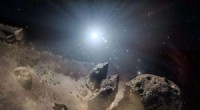
* Dense and Hot: White dwarfs are incredibly dense, packing the mass of our sun into a volume the size of the Earth. They are also very hot, but they gradually cool down over billions of years.
* No Fusion: White dwarfs do not have enough mass to sustain further fusion.
Planetary Nebula:
* Beautiful and Short-lived: Planetary nebulae are colorful and stunning, but they last only a few tens of thousands of years before dispersing into space.
* Elements for New Stars: The material ejected by the star enriches the surrounding interstellar medium with heavy elements, providing the raw materials for future stars and planets.
Summary:
A sun-like star's life ends with a dramatic transition from a red giant to a planetary nebula, leaving behind a dense, hot white dwarf core. The planetary nebula is a beautiful and short-lived spectacle, highlighting the star's final act of enriching the universe with its remnants.