Astronomy:
* Focus: Studies celestial objects like stars, planets, galaxies, and nebulae.
* Methods: Primarily observes and measures the properties of these objects, including their position, motion, brightness, and composition.
* Scope: Covers a wide range of topics, from the formation of stars to the evolution of galaxies.
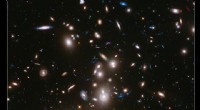
* Examples: Observing a supernova, analyzing the light spectrum of a star, mapping the distribution of galaxies in the universe.
Cosmology:
* Focus: Studies the universe as a whole, its origin, evolution, structure, and fate.
* Methods: Combines astronomical observations with theoretical models and physical laws to understand the universe's large-scale properties.
* Scope: Deals with concepts like the Big Bang, cosmic microwave background radiation, dark matter, and dark energy.
* Examples: Developing models of the Big Bang, studying the expansion of the universe, investigating the nature of dark matter.
In essence:
* Astronomy is the study of celestial objects.
* Cosmology is the study of the universe as a whole.
Overlap: Cosmology relies heavily on astronomical observations to gather data and test its theories. Astronomy can benefit from cosmological understanding to interpret the data and put celestial objects into a broader context.
Think of it like this:
* Astronomy is like studying individual trees in a forest.
* Cosmology is like studying the entire forest, its history, and how it interacts with the surrounding environment.