* High Temperatures: The intense heat from the Sun would vaporize any icy particles, which are crucial for the core accretion model of gas giant formation. This model suggests that gas giants form from a core of ice and rock that attracts and traps surrounding gas.
* Solar Wind: The Sun's powerful solar wind would push away any gas and dust, preventing the formation of a large enough core to attract the gas needed for a gas giant.
* Orbital Instability: Planets that form too close to a star are likely to have unstable orbits and potentially be ejected from the system.
Formation of Gas Giants:
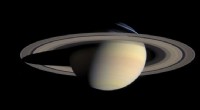
Gas giants typically form in the cooler, outer regions of a protoplanetary disk where icy particles can survive. These icy particles clump together, eventually forming a core massive enough to gravitationally attract and hold onto gas from the surrounding disk.
Hot Jupiters:
While it's rare, some planets called "Hot Jupiters" have been found orbiting very close to their stars. However, their existence is still a puzzle. The leading theory is that these gas giants formed further out and then migrated inward through gravitational interactions with other planets or the protoplanetary disk.
Conclusion:
The extreme conditions near the Sun, namely high temperatures and solar wind, prevent the formation of gas giants. They primarily form in the cooler outer regions of protoplanetary disks.