1. Spectroscopy:
* Ground-based telescopes: These telescopes use instruments called spectrometers to analyze the light from distant planets. This light contains information about the elements and molecules present in the planet's atmosphere.
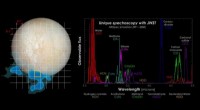
* Space telescopes: Telescopes like Hubble, Spitzer, and James Webb can observe in infrared and ultraviolet wavelengths, providing even more detailed information about planetary atmospheres.
* Transit spectroscopy: When a planet passes in front of its star (a transit), some of the star's light passes through the planet's atmosphere. By analyzing the change in the light spectrum, we can determine the composition of the atmosphere.
2. Occultation:
* Stellar occultation: When a planet passes in front of a star, the star's light is blocked by the planet's atmosphere. This creates a dip in the star's brightness, which can be used to infer the density and composition of the atmosphere.
3. Direct imaging:
* Adaptive optics: Ground-based telescopes use adaptive optics to compensate for atmospheric blurring, allowing them to take sharper images of planets.
* Space telescopes: Space telescopes like James Webb are optimized for direct imaging, capturing images of planets that are not obscured by Earth's atmosphere.
4. Spacecraft exploration:
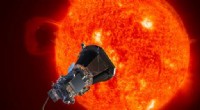
* Flybys: Spacecraft fly past planets, collecting data about their atmospheres using instruments like spectrometers and mass spectrometers.
* Orbiters: Spacecraft orbit planets, providing detailed observations of their atmospheres over time.
* Landers and probes: Spacecraft land on planets or drop probes into their atmospheres, allowing for direct measurements of atmospheric composition and pressure.
5. Modeling:
* Atmospheric models: Scientists use computer models to simulate the behavior of planetary atmospheres, taking into account factors like temperature, pressure, and chemical reactions. These models can help to interpret observational data and make predictions about the composition of planets.
Challenges:
* Distance: Planets are incredibly far away, making it difficult to gather enough light to analyze their atmospheres.
* Weak signals: The signals from planetary atmospheres are often very faint, requiring sophisticated instruments and analysis techniques.
* Atmospheric complexity: Planetary atmospheres are complex systems with many interacting processes, making it challenging to fully understand their composition and dynamics.
Despite these challenges, scientists have made remarkable progress in understanding the atmospheres of other planets. As technology continues to improve, we can expect even more detailed and precise observations in the future.